

The Book of James · Part 1
Faith That Endures
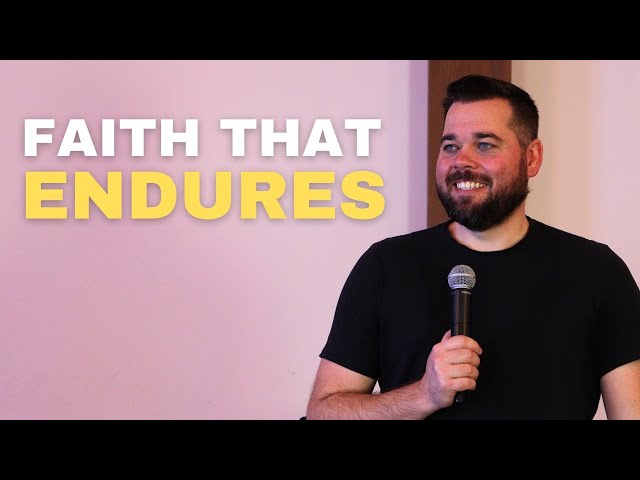
About this message.
Pastor Jay opens a new study through the Book of James with “Faith That Endures,” teaching from James 1:1–8. Fresh from finishing Hebrews, the church felt led to James, a practical book often compared to Proverbs, full of short, direct statements for everyday Christian living that echoes Jesus’ Sermon on the Mount. Most of us know faith that gets shaky, he says, with spiritual highs and dry seasons. James calls us to a faith that is solid, firm and sure in who God is and what He has said.
He starts with the author. James was most likely the half-brother of Jesus and a leader of the church in Jerusalem, yet he introduces himself simply as “a bondservant of God and of the Lord Jesus Christ,” bound in voluntary, lifelong service. During Jesus’ ministry His brothers didn’t believe in Him, but after the resurrection Jesus appeared to James (1 Corinthians 15:7). Tradition says James prayed so much his knees were like a camel’s, and that he prayed for the very people who killed him. Then comes verse 2: count it all joy when you fall into various trials. James treats trials as inevitable, much as Jesus spoke of the storm striking the house built on the rock.
“Trials don’t produce faith; they reveal your faith.”
The testing of our faith produces patience, and Pastor Jay explains that the Greek word, hupomone, means active endurance, the way a runner trains for a marathon instead of sitting still. Trials don’t produce faith, he says; they reveal it, showing what we really believe and where we run first when bad news comes. Faith comes by hearing, and hearing by the word of God (Romans 10:17). In verses 5–8 James moves from trials to wisdom. Many of us think about praying without ever actually asking, but God gives liberally and without reproach to those who ask in faith. The one who doubts is like a wave of the sea: restless, unstable and driven by every wind.
Pastor Jay encourages anyone unsure how to pray to talk to God as Someone real, with reverence but in plain words, and to pray His promises back to Him. He then invites the church to stand, lift their hands and ask the Lord, under their breath, for peace, direction or wisdom, and then to give Him thanks. He closes in prayer, thanking God that even in trials we can find Him, and reminding the church that He wants us to make our requests known, ending with “Not my will, but Yours be done.”
Key points
- Trials are inevitable for every believer. We can count them all joy, not because the pain is good, but because God can be glorified and do something in us through them.
- Biblical patience is not passive waiting. It is an active endurance that keeps going and finishes what God has begun.
- Trials don’t produce faith; they reveal it. Faith is built by hearing the word of God.
- When we lack wisdom, we need to actually ask God for it, not just think about praying. He gives liberally and does not hold it against us for asking.
- We are to ask in faith without doubting, trusting that God wants to answer and is able to, so we are not tossed about like a wave of the sea.
From the message
“Not because the trial is good. Not because we love the trial. It’s because I get to put my trust in the Lord.”
“He does not hold it against you for asking.”
Leading a group?
Groups Discussion Guide
Questions and scripture to walk through this message together.
Download PDFHear it in the room.
There's nothing like worshiping together. Join us this Sunday at 10am — we'll save you a seat and a coffee.